
Create an account to receive
15% off your first order.

Tourmaline
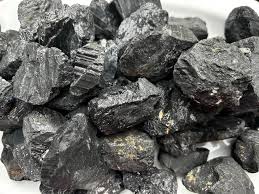
Tourmaline is a mineral classed as crystalline boron silicate and has a vitreous luster. A complex silicate mineral made of aluminum borate, containing elements like calcium, manganese, and iron. It has an opaque transparency and is part of the hexagonal crystal system. Black Tourmaline is also known as Schorl. Tourmaline is an 8th Anniversary gemstone.



Chakras -
Root Chakra, Heart Chakra
Birthstone -
October
Zodiac -
Virgo, Libra
Planet -
Saturn
Element -
Earth
Numerical Vibration -
Number 2 and 4
Typical colors -
Most commonly black, but can range from brown, violet, green, pink, or in a dual-coloured pink and green (watermelon)
Rumored to be born from the rare energy of a rainbow, Tourmaline’s many shades ripple with imaginative play, joyful generosity, and attracting perfect prosperity. Created from silicate minerals, these precious stones can be found in a range of colors. One of the most well known is the midnight hued stone of the Black Tourmaline, but for those craving a splash of color, you can find Tourmaline crystals in brighter shades of pink, green, purple, and even medley like rainbow shades or the color of watermelon. Recognized across cultures and healing traditions, Tourmaline properties are often linked to protection, energetic cleansing and emotional balance.
HEALING PROPERTIES
Black Tourmaline can be used to both repel and protect against negativity. It is excellent for deflecting radiation energy. This stone is all about shielding you from psychic attacks and keeping you feeling safe so you can step out into the world infused with purpose and self-confidence. By far the most common variant of Tourmaline, Black Tourmaline is considered to be a very grounding stone, connecting its user to the Earth and the spiritual realm simultaneously. It acts as a bridge connecting the two and allows its user to see more clearly, giving a sense of empowerment, self-confidence, and certainty.
It enhances one’s physical wellbeing by providing an increase in physical vitality, emotional stability, and intellectual acuity. It’s one of the only crystal stones that can be electrically charged which is a testament to its power. Nowadays, we tend to turn to Tourmaline when we crave balance and healing, with each kind of color connecting to a different part of our soul energy. When you feel like you have the world on your shoulders, Tourmaline does marvelous things like alleviating all the burdens you carry. Tourmaline is said to help individuals find balance and clarity in times of turmoil. Many recommend this exquisite stone for those dealing with stress, anxiety or depression, as it is thought to foster inner peace and resilience. It brings emotional stability and a sense of calm to those who seek its benefits.
Tourmaline aids in understanding oneself and others. It promotes self-confidence and diminishes fear. Tourmaline attracts inspiration, compassion, tolerance and prosperity. It balances the right-left sides of the brain. Tourmaline can offer greater empathy and understanding. Often called the “Stone of Reconciliation,” Tourmaline may help you address resentment to move toward acceptance. Besides resentment, Tourmaline can purify negative feelings like anxiety and self-doubt, transforming these into serenity and confidence. Black Tourmaline promotes a sense of power allowing for a clearer, more objective view of the world. It is empowering to those who must live or work in challenging environments or when facing difficult circumstances
HISTORY
The colorful Tourmaline varieties were said to have made their way from Sri Lanka over to Europe at the start of the 18th Century. From India to Australia and beyond, Tourmaline is a worldly gem that can be found scattered across the globe. Its name comes from the Sinhalese term ‘Turmali’ which translates to unknown gemstone of mixed color, lending a sense of mystery to its makeup. When heated or rubbed, Tourmaline acquires an electric charge and attracts small objects like dust, ashes and other lightweight objects, much like amber. This phenomenon is called piezoelectricity (pay-zoh-electricity), and it is considered a unique property. The first documented record of piezoelectricity is in the early 18th century.
Before it made a name for itself in popular culture, the power of Black Tourmaline was known only to those who worked with it. Many shaman of African, Aboriginal, and Native American tribes carried Tourmaline to protect themselves from danger.
A statue of Alexander the Great, found and believed to be carved in India, confirms this. The statue has been dated back to the second or third century B.C. Tourmalines of all colors can be electrically charged by rubbing your fingers on each end, resulting in the attraction of particles in the air.
Tourmaline can often be mistaken for other gemstones. In fact, there are Russian Crown jewels that were celebrated for their wealth of rare rubies but turned out to be Tourmalines. In Brazil too, a Spanish knight believed he had unearthed an emerald, but it also turned out to be a variety of glowing Green Tourmaline. It certainly is a stone that likes to play on the senses.
Tourmaline is renowned as the gem of sensitive poets and creative artists. Shakespeare had a small collection of Tourmaline jewelry to help him overcome writer’s block. Tourmaline is believed to inspire creativity and was used extensively as a talisman by artists and writers from the Renaissance through the Victorian Age.
The rarest member of the Tourmaline family is the pink Tourmaline. In fact, it is even rarer than a ruby! The Empress Dowager Tz’u-hsi (tzoo-she), the last Empress of China, adored and collected pink Tourmaline. During her lifetime, she bought nearly a ton of it from the Himalaya Mine in California. When she died, she was laid to rest surrounded by all her jewels with her head resting upon a prized pillow of carved pink Tourmaline.
Brazil is the worlds leading source of Tourmaline for nearly 500 years. In the 1500s Portuguese explorers obtained green and blue Tourmaline from indigenous people and found it while panning streams in search of gold. They thought the colorful stones were emeralds and sapphires and sent them back to Portugal, where they were cut into gems and used to make jewelry for royalty and wealthy citizens
Other cultural interpretations of Tourmaline crystals meaning revolved around spiritual insight. Ancient ceremonies in India involved Tourmaline to access insight and wisdom from higher powers, especially for differentiating good from evil. Ancient Africans used Tourmaline to uncover the cause behind certain health issues. Several tribes in Africa, America, and Australia use Tourmaline as a protective talisman or as funeral gifts.
CHAKRAS
From the Root chakra to the Crown chakra, the heart chakra to the third eye, Tourmaline works with all the chakras to keep the energy flowing in full force. While different shades work with different chakras, the heart and the Root chakra tend to be the most connected with Black Tourmaline.
The Root chakra is how we feel safe and steady in this wide wild world. When your root chakra is blocked, insecurities and paranoia can creep in. Using a black Tourmaline gemstone can balance your Root chakra, bringing you greater trust and connection to your purpose. When our Root chakra is firm it is like the tree, we are able to invite our branches to grow and bloom in many different directions, all without shaking our foundations.
A blocked heart chakra can make you feel anxious and aimless. When your Heart chakra is blocked we struggle to give and receive love with free authenticity and can become a little shutdown and too ready to shut others out. Using Tourmaline to open this chakra can bring back joy and self-respect. With a clear heart chakra, we are open and brimming with deep compassion.
CLEANSING AND CHARGING
Do not store Tourmaline with harder gemstones or other materials that might rub against it and cause damage. As with all gemstones avoid large temperature changes such as leaving it near a heater vent or in a hot car that can cause the crystal to fracture.
Do not clean Tourmaline in a home ultrasonic cleaner. Tourmaline jewelry can be cleaned once a month to retain its healing properties. The two most common methods of cleansing Tourmaline involve soaking it on saltwater or storing it in brown rice for 24 hours. Always thoroughly rinse your Tourmaline after soaking or storing it and dry it gently but firmly with a soft cloth.
As for charging Tourmaline, there are also two common methods. The first method of Tourmaline charging goes back to its crystal formation. Because Tourmaline is created using high levels of heat, you can actually squeeze the crystal in your hand, allowing it to absorb the heat energy from your skin and putting it under pressure. Doing so will allow the crystal to charge quite rapidly and effectively, as the contact with human skin will actually speed up the charging process.
The second method for charging Tourmaline is just setting it out in direct sunlight. This process will take slightly longer but will also allow for a more complete charging of the crystal. Simply leave your Tourmaline on a window ledge or lay it outside on the Earth to absorb the suns rays.